Herbs from our garden and surroundings: #2 HAZEL CATKINS
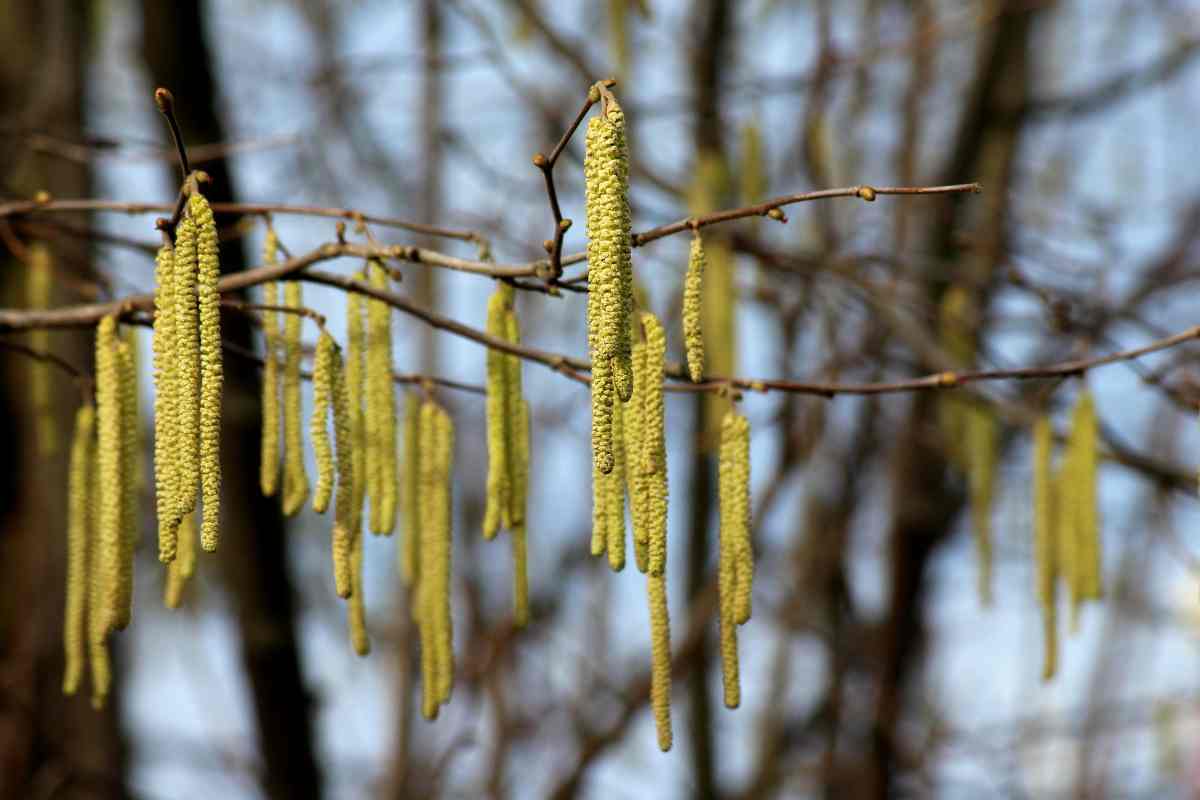
Hazel is a plant that a lot of people know, mostly because of hazelnuts. The scientific name of the common hazel is Corylus avellana, belonging to the Betullaceae family, while the common name comes from the anglo-saxon haesel meaning cap/hat, referring to the cap of leaves surrounding the nut on the tree. This plant has a really long history, dating back to the end of the last ice age around 10.000 years ago when it was one of the first to colonize the area of Mesopotamia.
It assumed different meanings throughout history, starting from his twigs that were given in the hope of bringing happiness by Romans, on to Germans that considered it a symbol of fertility, till the Celtic culture where it was considered a sacred plant, symbol of wisdom and knowledge (there is an interesting Celtic legend about hazel, check in the sources!). It is also believed to have a connection with magic, as it was used to build wands and its twigs are used by dowsers to find underground water.
Hazel has been part of human nutrition since very ancient times, mainly through hazelnuts, but few people know that also its catkins are edible and that’s what we’ll talk about here!
Hazel catkins are one of the first signs that spring is coming and they will appear on the branches even before the leaves. These catkins are the male flowers of these plants, that in spring will open up and release pollen for the wind to spread so that it could reach the female flowers of other hazels, which are tiny bud-like flowers with red stigmas.
As said, the wind is responsible for the pollination of hazels, but the catkins are still visited by bees, which find in them the first nutrients after winter.
Culinary Use
Hazel catkins are rich in proteins and can be used in different ways in the kitchen! Our first suggestion, that we personally tried as you can see from the pictures, is to pick them up before they are completely open, so that they’re still rich in pollen, to blend them and add them to the sour dough to make some flavored bread.
Another interesting idea is to make some pancakes with them. Just prepare some batter with egg, flour and sparkling water (but you can also use milk or beer), dip the catkins in the batter, stir them and then fry them in a pan.
Finally, it’s also possible to create a beverage out of them, by making them fermentate with sugar in water. To do this, just put 20 catkins in a liter of water with 20g of sugar in a jar and close it. Leave it to rest for 4/5 days, shaking it and opening it once a day to oxygenate it, and then it’s ready to go!
Medical Use
Hazel catkins are not widely used for their healing properties, but they are still known for their sudoriferous properties and against fever. For this reason they can be used in case of flu, cold or sometimes obesity (for the loss of weight caused by sweating). They’re used in the form of tisane, by boiling them in water (50g per liter of water) and drinking after meals, perhaps with some honey as it could be a bit bitter.
Useful sources
https://www.erboristeriadeifrati.it/glossary/nocciolo-corylus-avellana/
https://www.treeguideuk.co.uk/hazel-catkins1/